
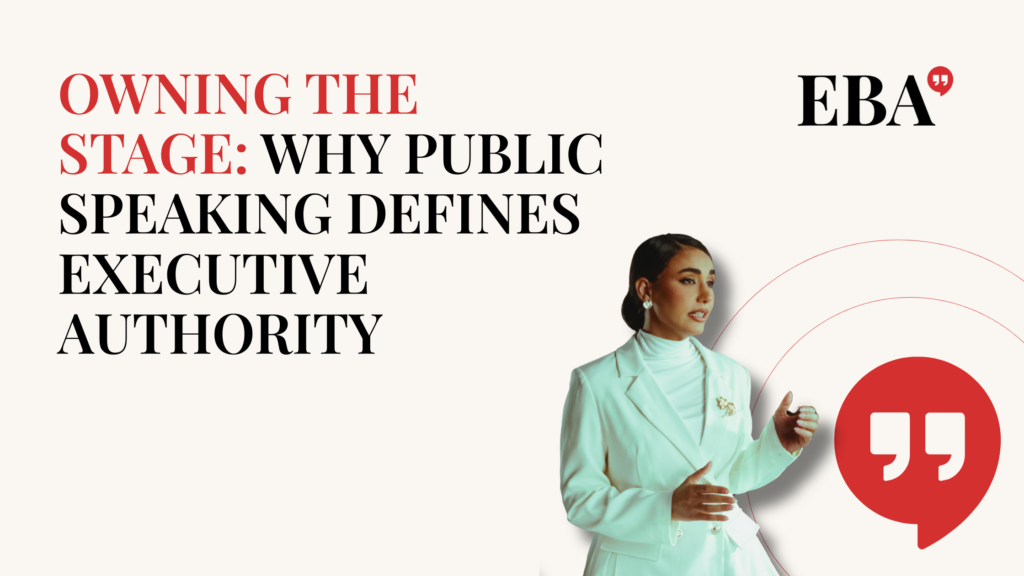
Effective leadership today requires presence, and public speaking remains one of the most powerful ways executives can move people to action. A live audience—whether employees, customers, investors, or peers—creates a moment of accountability that no press release, social post, or email update can replicate.
Speaking on stage forces clarity. It tests whether a leader can translate complex concepts into inspiring ideas. For executives navigating constant disruption, the ability to stand before an audience and articulate their vision with confidence has become a defining marker of authority.
Research consistently supports the value of this skill. Studies examining leadership development have found that public speaking confidence is closely associated with the ability to build trust, influence others, and establish authority across diverse audiences. In business settings, executives invited to speak at conferences and forums are perceived as thought leaders, which in turn creates opportunities for partnerships, board consideration, and expanded influence. Visibility, in this context, is leadership currency.
Public speaking skills refer to an executive’s ability to connect, persuade, and inspire through live or recorded communication. The stage may be a keynote at an industry summit, a panel discussion among peers, a fireside chat with investors, or an internal town hall with employees. A senior title no longer confers authority. It comes from how audiences interpret the message. Executives who communicate with clarity and intention transform ideas into momentum and listeners into advocates.
The organizational impact is significant. Research from Coqual shows that leaders who demonstrate executive presence—often reinforced through public communication—are 26% more likely to advance into senior roles. Internally, direct communication from leadership matters just as much. Gallup found that employees who hear directly from their leaders report higher trust, stronger engagement, and greater motivation than those who receive only formal corporate communications.
Externally, high-profile presentations position executives as influential experts. Invitations to speak publicly reinforce reputation and signal that a leader’s perspective is valued. As Forbes has noted, public speaking enables leaders to elevate their reputation, influence decision-making, and expand professional impact. Prestigious forums such as Davos, CES, and respected industry summits often serve as credibility accelerators, signaling to stakeholders that a leader’s ideas are relevant and trusted.
Executives who avoid public speaking cede the stage to competitors, critics, or commentators who may not share their values or perspective. In fast-moving sectors, absence from industry dialogue can be seen as irrelevance. Yet poor speaking can be just as damaging. Keynotes filled with jargon, generic messaging, or over-scripted delivery rarely inspire confidence. Awkward or unprepared appearances signal a lack of confidence that overshadows strong operational performance. The spotlight amplifies everything—clarity and conviction resonate, while a lackluster delivery leaves a lasting impression.
At its core, public speaking is about connecting with audiences. Perfection isn’t necessary, only presence, coherence, and authenticity. Former PepsiCo CEO Indra Nooyi exemplified this approach by blending personal experience with strategic insight, making complex business priorities feel relatable and human. Her speaking style demonstrates that authority depends on trust.
Various formats serve different leadership purposes. Keynotes set direction and inspire collective action or belief. Panels demonstrate intellectual agility and peer credibility. Fireside chats humanize leaders, revealing values and judgment under pressure. Internal town halls reinforce culture, alignment, and accountability. Regardless of the setting, demeanor determines impact. Executives who speak with intention shape how their leadership is understood long after the event ends.
Practice can greatly improve stage presence. Leaders benefit from developing a signature narrative that reflects their values, priorities, and long-term vision. Returning to consistent themes helps audiences associate those ideas with the leader over time. Storytelling is a speaker’s most effective tool. Facts inform, but stories persuade. Executives who illustrate strategy through real experiences—successes, failures, or lessons learned—create emotional resonance and credibility.
Coaching is often a powerful accelerator. Executive presentation programs emphasize delivery, pacing, body language, and vocal tone, showing how small adjustments can lead to dramatic improvements. Practice in lower-stakes environments—team meetings, webinars, internal briefings—builds confidence before larger stages. Authenticity should guide every appearance. Audiences disengage quickly from overly scripted performances, but respond positively to leaders who acknowledge uncertainty and speak in their own voice.
The value of public speaking multiplies when leaders extend its reach. Talks should be recorded and thoughtfully repurposed into short video clips, internal communications, investor updates, or written reflections. A single keynote can generate months of credible content. Continuous improvement matters as well. Reviewing recordings, seeking feedback, and refining delivery ensures that each appearance strengthens authority rather than reinforcing poor habits.
Executives who master public speaking do more than communicate. They inspire confidence, shape industry dialogue, and reinforce trust with key stakeholders. Stage authority is a core leadership competency, especially in turbulent times. Leaders who step onto the stage with clarity, authenticity, and conviction define not only their personal reputation, but the trajectory of the organizations they lead.
Executive FAQ on Public Speaking & Stage Authority
What does stage authority mean for executives?
It is the ability to influence audiences through live or recorded communication—keynotes, panels, fireside chats, or internal meetings—by speaking with clarity, authenticity, and conviction.
Why is public speaking important for leaders?
Public speaking builds trust, strengthens employee engagement, enhances external credibility, and positions executives as respected voices in their industries. Research shows leaders who communicate directly are perceived as more effective and influential.
What are the risks of avoiding or mishandling public speaking?
Silence leaves a narrative vacuum, while poorly prepared speeches undermine credibility. Overuse of jargon, lack of engagement, or overly scripted delivery can create lasting negative impressions.
How can executives improve their stage presence?
By developing a clear narrative, practicing storytelling, investing in coaching, starting with smaller settings, engaging audiences authentically, repurposing content, and seeking regular feedback.